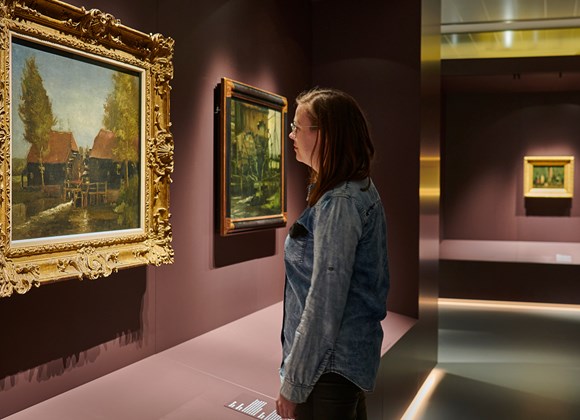
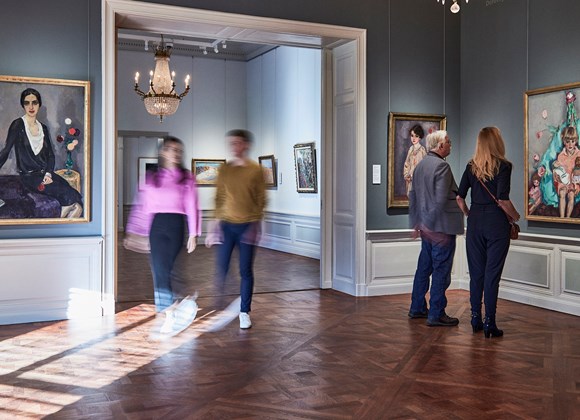
In Ketahanan: stories of resilience, Moluccans talk about their history in the Netherlands. The exhibition with works of art, historical objects, photos and video stories was developed together with the community. Ketahanan shows how diverse the community is, why plurality of viewpoints is important, and how new generations give direction to the future. Ketahanan offers space to images that were neglected for a long time and invites visitors to listen, to learn, and to move with a history that is still very much alive.
Visit the exhibition:
Co-creation
This exhibition was created together with people from the Moluccan community and is built around four themes: (de)colonisation, diaspora, resilience and future. Together they constitute a story with a chronology of some sort. Instead of a strict timeline, we use the themes as building blocks for a clear beginning, middle and end. This setup allows the story to develop from sensitive and poignant topics to a more hopeful perspective on the future. This is in line with the core message and with the wish of the community to highlight this sensitive history, but also make room for resilience and the way forward.


Themes
(De)colonisation
This theme deals with four centuries of colonisation and anti-colonial resistance, with political decolonisation in the twentieth century and cultural decolonisation in the twenty-first century. It shows how colonial ideas and power relations still have their effects in our society. We show how – often out of necessity – generations of Moluccans adjusted themselves, under a coloniser in the past and in the country of arrival later. What started as a way to survive became part of the collective consciousness of the communities. Traces of this colonial past are still visible in everyday life. Like other diaspora communities, the Moluccan community is actively working on decolonisation.
"You do not know who you are until you know where you come from."
— Stefanie Hehalatu, work session participant

Installation photo of the exhibition Planetary Poetics (2025) at Framer Framed, Amsterdam. Photo: © Maarten Nauw / Framer Framed

Lucas Silawanebessy, The Drifter, 2016.
Diaspora
The Moluccan diaspora starts with the exodus of parts of the Moluccan community and the passage to the Netherlands. That journey had many different faces: some Moluccans came earlier to study, others arrived later as marines from Papua, by air, or after marrying someone who already lived in the Netherlands. The migration was a traumatic experience for some, and a life-changing event for nearly everyone. Living in a diaspora means being at home in two places at the same time and involves a lot of switching between cultures. Biculturality is a much discussed aspect of the Moluccan experience, but also a recognisable theme for other communities with a migration background.
"Floating or swimming, somewhere in the middle of the sea, far away from your island. No ground beneath your feet of which you can say: here I stand."
— Salomé Kopong, work session participant

Hatutamelen, We Are One, 2018 (Fotograaf: Raoul Matulessy) (detailfoto van een installatie rond een tifa-trom)

Jerred Taihuttu working in his vegetable garden in the Moluccan Lunetten encampment. Photo: personal archive of the Taihuttu family
Resilience
Resilience runs like a recurring theme through all the stories in the exhibition. That resilience already manifested itself in the colonial period, in anticolonial resistance and in the urge to survive under Dutch, Portuguese, British and Japanese rule. The passage to the Netherlands, the arrival, life in encampments, the discharge from the KNIL and the struggle for recognition also constantly called for resilience and perseverance. Resilience means two things here: the ability to adapt to continuously changing circumstances and the possibility to stay who you are, despite setbacks.
"If you use what is in you, it will save you."
— Cecile Patty, work session participant
Future
The younger – third, fourth and fifth – generations give new meanings to what it is like to be Moluccan in the Netherlands. Their search often focuses on authenticity and connectedness: the desire to belong somewhere. Sometimes, this is expressed in giving up existing ideas or, on the contrary, the revaluation of native knowledge or the connection with the Moluccan islands and languages. Thus, this theme ends with an open-minded and hopeful gaze towards the future: the opportunity for new generations to realise a future in which the community's past is no longer a burden, but a strength.
"How are you, as a community, going to apply the knowledge that we have in the future?"
— Andre Leatomu, work session participant
Trilingual exhibition
Ketahanan is presented in Dutch, English and Indonesian. We understand that there are sensitivities within parts of the Moluccan community with regard to Indonesia and the use of Bahasa Indonesia.
We understand that the choice for Bahasa Indonesia in preference to another variant of Malayan is a sensitive issue for parts of the Moluccan community. At the same time, it is the working language in the Moluccas, still used by many Moluccans living in the Netherlands for communication with relatives and fellow-villagers. The use of Bahasa Indonesia offers a way to leave – where possible – the past behind us and look for the connection. Besides, it lowers the threshold for Indonesian museum visitors in the Netherlands. Translations were made in cooperation with Bahasa Basudara, the sensitivity reading and editing were done by Rochelle van Maanen.